Frankie Jenkins · 5 September 2026
Decoding Interplay Between Site Architecture Shifts and Organic Traffic Recovery Patterns via Specialized Analytics Platforms
Site architecture shifts encompass changes to URL structures, navigation hierarchies, internal linking frameworks, and technical elements such as schema markup implementation or mobile-first indexing adjustments, and these modifications directly influence how search engines crawl and index web pages while altering user navigation paths. Observers note that platforms handling large-scale content management often undergo such revisions during platform migrations or redesign initiatives, and data from multiple industry reports indicate corresponding fluctuations in organic visibility metrics.
Patterns in Traffic Response Following Structural Changes
Research indicates that organic traffic frequently experiences an initial decline after major architecture updates because search engine algorithms require time to reprocess new sitemaps and reassess page authority signals, while users encounter temporary disruptions in established pathways. Studies from academic institutions across Europe and North America reveal recovery timelines that span several weeks to multiple months depending on the scope of alterations and the presence of redirect chains or crawl budget optimizations. Those who monitor large enterprise sites report that incomplete canonical tag setups or broken internal links extend these periods, whereas thorough pre-launch testing through log file analysis shortens the interval before metrics stabilize.
Analytics Platforms and Their Measurement Capabilities
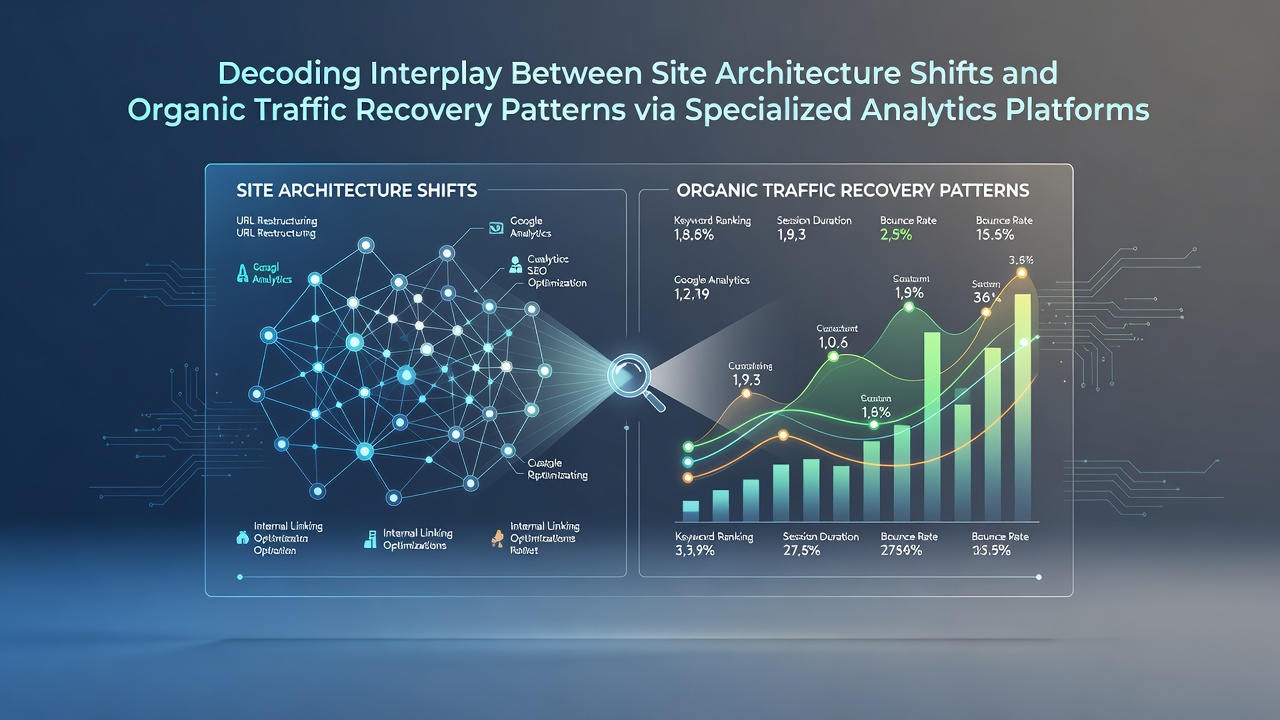
Specialized analytics platforms integrate data from sources including server logs, search console APIs, and third-party rank tracking tools to map correlations between architectural modifications and traffic recovery curves. These systems apply segmentation filters that isolate affected page cohorts, enabling observers to track metrics such as impressions, click-through rates, and session durations across distinct time windows. In September 2026 several platforms introduced enhanced machine learning modules that predict recovery velocity based on historical crawl frequency patterns and backlink profile stability, and figures from platform documentation show improved accuracy in forecasting when specific URL clusters regain prior performance levels.
Key Variables Tracked During Recovery Phases
- Crawl error rates and indexing latency measured through daily log aggregation
- Internal link equity distribution visualized via graph analysis modules
- User behavior signals including bounce rate shifts post-navigation redesign
- Competitive ranking movements benchmarked against industry category averages
Platforms also incorporate geographic segmentation that highlights regional differences in recovery speed, and evidence suggests sites serving multiple languages experience asynchronous patterns where one locale rebounds faster due to localized crawl prioritization. Researchers have documented cases where sites implementing progressive rollout strategies, testing architecture changes on subsets of pages first, achieve more consistent recovery trajectories compared with full-site simultaneous deployments.

Documented Recovery Timelines and Influencing Factors
Data compiled across multiple verticals shows that sites executing clean URL migrations with comprehensive 301 redirect maps typically observe 60 to 80 percent of lost traffic returning within 90 days, although full restoration of pre-change rankings often extends beyond this window when new architecture elements require additional algorithm evaluation cycles. Industry organizations tracking digital performance metrics have noted that pages with strong external link profiles recover faster because authority signals transfer more readily through updated internal structures. Those analyzing recovery patterns emphasize the role of consistent content updates during transition periods, since fresh material encourages search engines to recrawl modified sections more frequently.
Specialized tools further allow correlation analysis between specific architecture decisions and subsequent traffic curves, revealing for instance that flattened navigation hierarchies reduce average page depth and thereby improve crawl efficiency on content-heavy domains. Academic studies published in peer-reviewed journals confirm these relationships through controlled experiments that isolate variables such as redirect chain length and sitemap update frequency.
Conclusion
Specialized analytics platforms provide the measurement infrastructure necessary to decode connections between site architecture shifts and organic traffic recovery, delivering granular visibility into crawl behavior, indexing status, and performance indicators. Observers continue to refine predictive models as new data emerges, and the integration of advanced segmentation continues to support more precise timeline estimations across diverse site types and scales.